* Translated by Janine Muller Sherr
We are currently in the month of Elul when there is much discussion about the topic of teshuva (usually translated as repentance). But what does the word ”teshuva” actually mean?
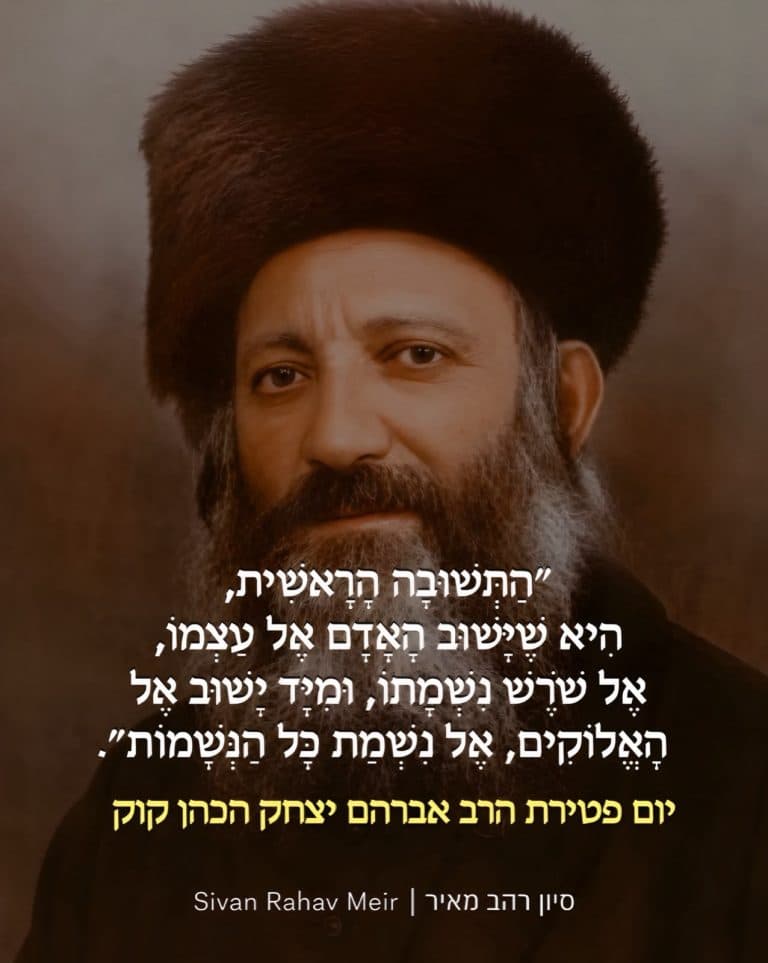
Today, the third of Elul, we commemorate the yahrzeit of Rav Avraham Yitzhak HaKohen Kook. Rav Kook wrote a beautiful definition of the teshuva process:
“The primary teshuva, that which immediately lights the darkness, is when a person returns to himself, to the root of his soul—then he will immediately return to God, to the soul of all souls.”
At times, the external circumstances and turmoil of our lives will obscure the essence of who we really are, and who we have the potential to become. These external factors cause us to become confused and act in ways that are beneath us.
Rav Kook says that teshuva is the process of turning inward, returning to our true selves. If we return to ourselves and to the source of our souls, we remember that we are all created in the image of God, in other words, that God is the root and the source of who we are. We belong to Him and desire to live according to His will and to fulfill the mission He designated for us in this world.
Rav Kook explains that the teshuva process is intended not only for individuals but also for the collective—that the Jewish people and the entire world need to return to their true essence, to what they were meant to be.
May each one of us merit to return to ourselves and may Rav Kook’s memory be for a blessing.