1. This Shabbat we read Parshat "Vayeshev," the ninth portion in the Book of Genesis. It begins to tell the story of Yosef and his brothers, which will accompany us until the end of the book, from the bitter quarrel to the reconciliation and family reunion.
2. The central theme of the portion is the rift between Yosef and his brothers. Yosef, the beloved son of Yaakov our forefather, dreams about becoming a leader. His father gives him a coat of many colors, and the brothers? "They hated him and could not speak to him peacefully." Eventually they throw him into a pit and sell him. Yosef's cry resonates to this day: "I seek my brothers." This is a foundational story about the brotherhood that should exist between the different tribes.
3. Yosef ends up as a slave in Egypt. He had many excuses and reasons to abandon his identity and faith. The people closest to him hated him, threw him into a pit, sold him. He could have decided to forsake his values, but he chose differently. Everywhere he goes, he represents faith in God and evokes respect and appreciation.
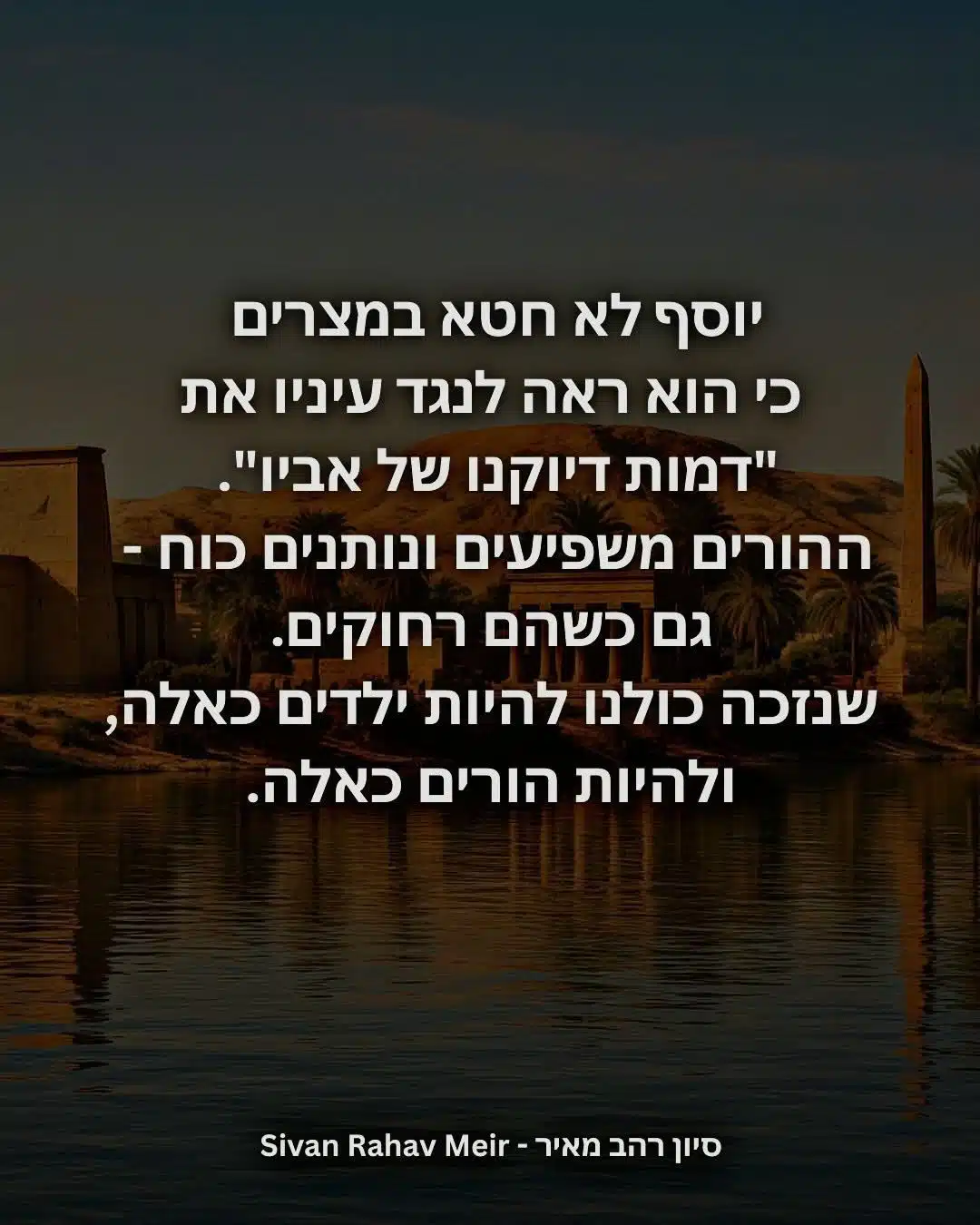
4. Our commentators explain that one of the reasons Yosef did not sin in Egypt was that he saw before his eyes "the image of his father's face." Parents influence us even when they are not next to us telling us what to do. They inspire love and loyalty even when they are far away. Even in the pit, even in the house of Potiphar the Egyptian, and even in prison, Yosef remembers Yaakov and his Judaism and wants to remain part of it. May we all merit to be such children, and to be such parents.
5. Parshat "Vayeshev" is usually read on the Shabbat before Chanukah. And indeed, on Sunday we will already light the first Chanukah candle, the holiday of the victory of the Jewish spirit and the victory of light over darkness.
Shabbat Shalom and Chanukah Sameach.