* Translated by Janine Muller Sherr
1) Today—from dawn until nightfall— we observe Ta’anit Esther (the Fast of Esther).The fast is named for Queen Esther and is especially relevant this year. When faced with Haman’s evil plot to exterminate all the Jews, Esther teaches us how to contend with distress and an existential threat—she approaches King Achashveirosh, but at the same time she instructs Mordechai to “Go, assemble all the Jews of Shushan and fast on my behalf.” She has a plan, but she knows that she won’t be able to accomplish it on her own. Her success is dependent on all the Jews coming together to fast and to pray with courage and faith. The crisis recounted in the Megillah leads the Jews to reclaim their faith and return to God.
2) Notice that this is not a fast commemorating a tragic event— such as the destruction of the Temple on Tisha B’Av—but a fast that concludes with salvation from destruction. Today we also observe this fast as a day of prayer and petition that has the potential to bring great salvation. In the midst of a historic military operation, we can pray for the Jewish people, for the success of our soldiers, and for the protection of the home front, in addition to help with our personal struggles and for the arrival of the complete redemption. May all of our prayers be fulfilled.
3) It is customary to give tzedakah today in commemoration of the half-shekel that was donated to the Temple at this time of year. There are many organizations and websites that enable you to do so (You can search under “machatzeet hashekel—the half-shekel.”)
4) It is important to follow the home front command instructions regarding how services will be conducted this year. In addition to our regular prayers, we recite selichot and “Avinu Malkeinu.” There are those who also recite chapter 22 of the Book of Psalms which is attributed to Queen Esther, who recited this prayer before approaching Achashveirosh. The psalm opens with the words: “My God, my God, why have you forsaken me?” It is also a tradition to light a candle for Queen Esther and Mordechai.
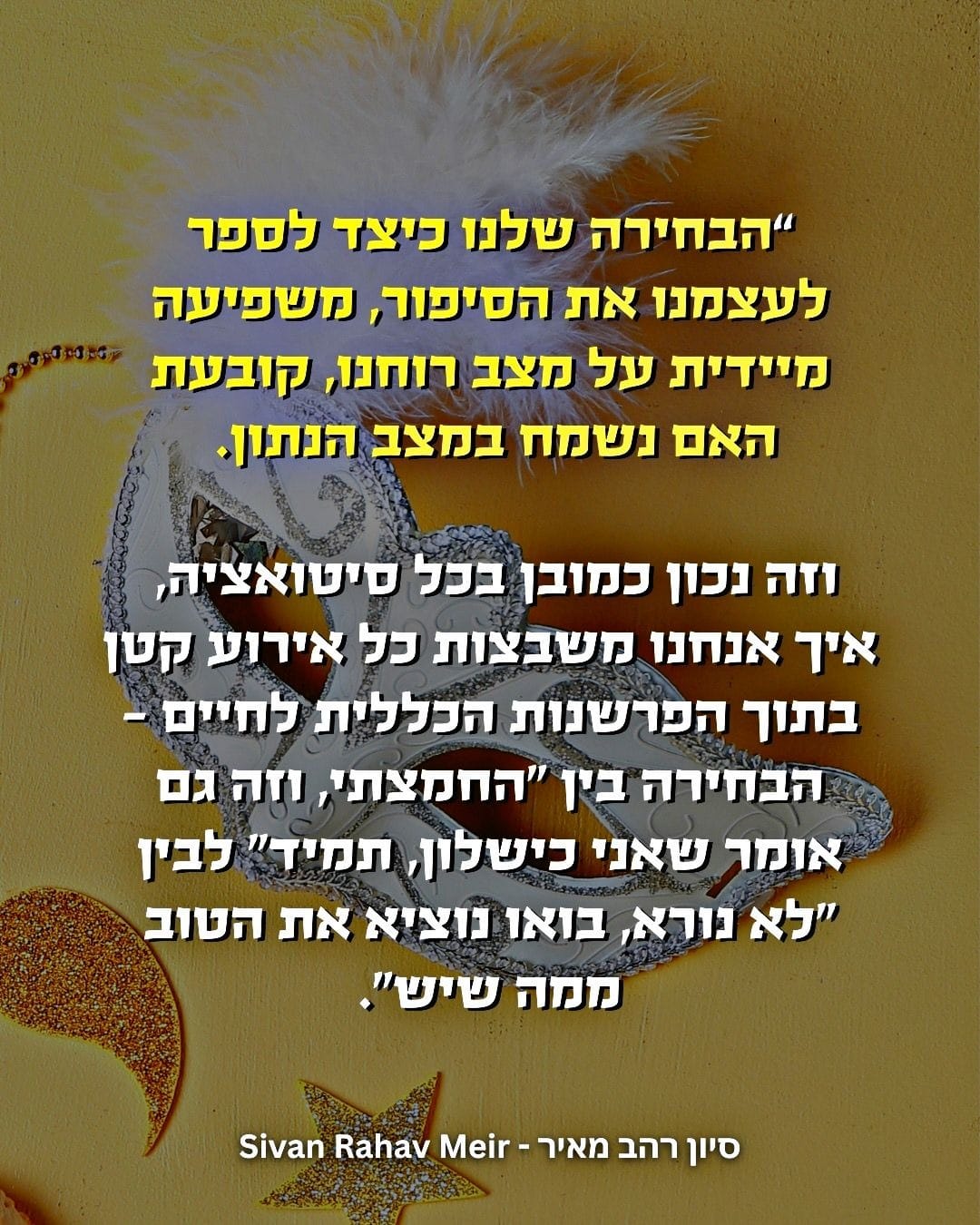
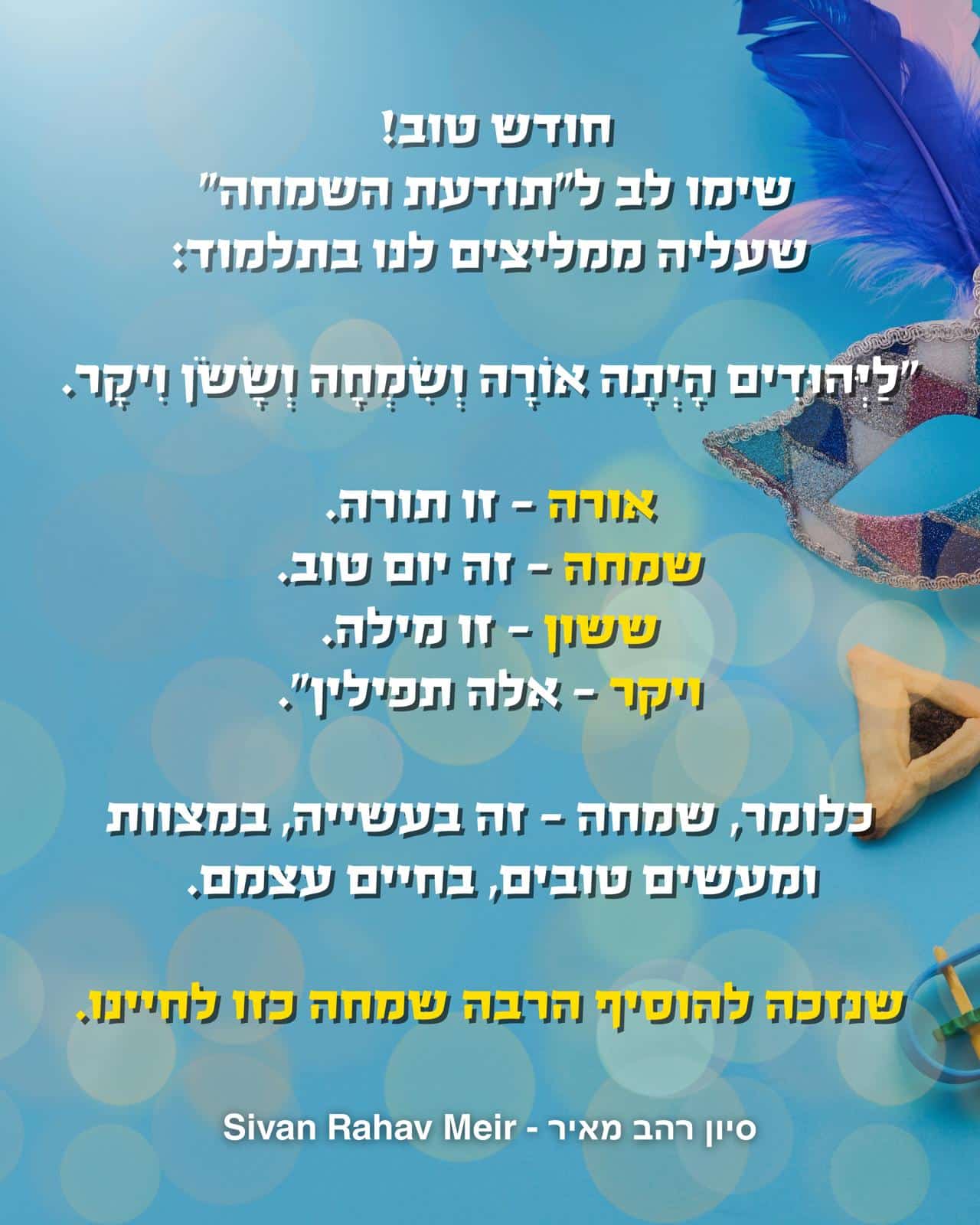
5) At the conclusion of the fast, we listen to Megillat Esther, which is read from a scroll written on parchment, and then Purim officially begins. We will do the same this year—perhaps with even greater intensity. Our commentators explain that after a day of fasting and soul-searching we can experience true and profound joy. Tonight, in keeping with home front command instructions, may we merit to listen to the story of the Megillah—the great story that we are continuing today.
May we merit to observe a meaningful fast and to celebrate a happy Purim, and may we hear besorot tovot (good news) soon!