* Translation by Yehoshua Siskin
After the dramatic narrative in Genesis, Exodus, Leviticus, and Numbers, this week we begin reading Deuteronomy (Devarim), the fifth and final book of the Torah.
At first glance, nothing much seems to happen in Deuteronomy. Moshe takes leave of the people with one long farewell speech. The entire book is a summary of almost forty years of wandering in the wilderness.
So why is it so important? Why is Deuteronomy so crucial, especially before entering the Land of Israel?
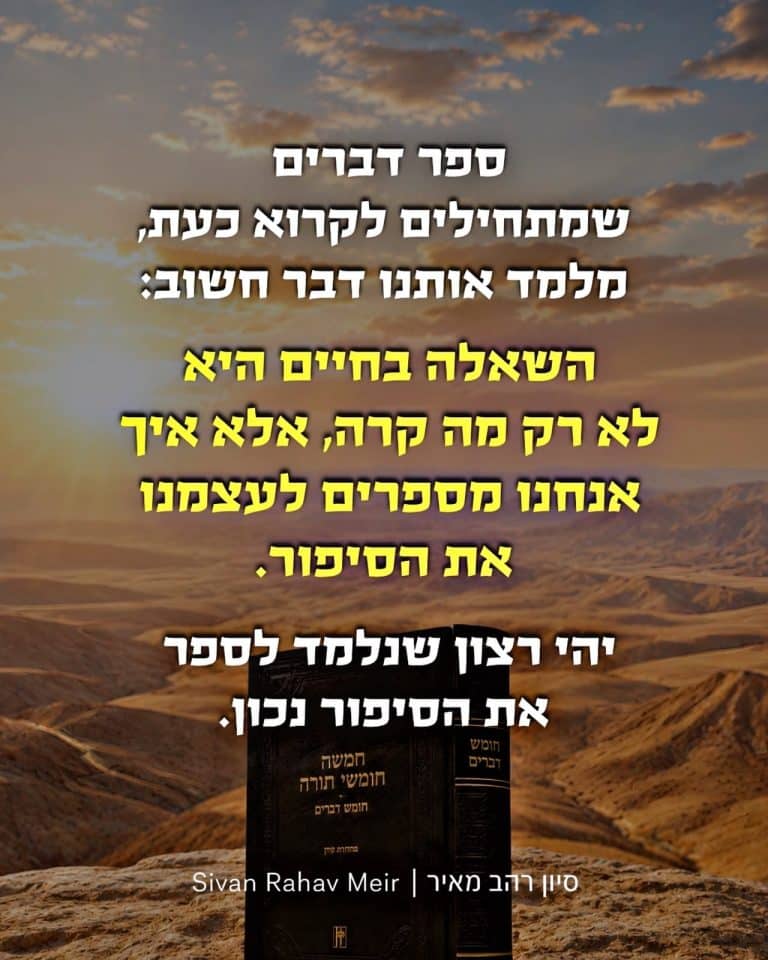
Because the question in life is not only what happened to us, but how we tell ourselves the story.
For example, how should we relate to our sins and failures? Do we mistakenly believe they define us, or do we see them as temporary setbacks to rise above, stimulating us to grow and reach new heights?
And how should we relate to our successes—to moments of holiness and spiritual elevation? Do we let them fade away, or do we learn to preserve them through increased Torah study and greater devotion to mitzvah observance??
Throughout Deuteronomy, Moshe guides us towards the correct path. He teaches us how to tell our inspiring story, providing the spirit of determination needed to continue our journey.
We are now in an election season in Israel, so we have good reason, as well as time, to wonder: What is our larger story and where are we headed? Who are the “Moshe” figures in our lives—people whose vision rises above the present moment, connecting us to our history, to our true selves, and to God?
How deeply we need the Book of Deuteronomy now, with its broad perspective, rooted in love for every Jew and faith in God, with ancient words that endow us with formidable strength and add immeasurable meaning to our lives.
Besorot tovot.