* Translation by Yehoshua Siskin
Every year I republish this simple idea, and each time I receive surprising responses about how well it works.
So here, this is what Rabbi Da'el Cohen from the "Rosh Yehudi" community in Tel Aviv wrote to me a few years ago:
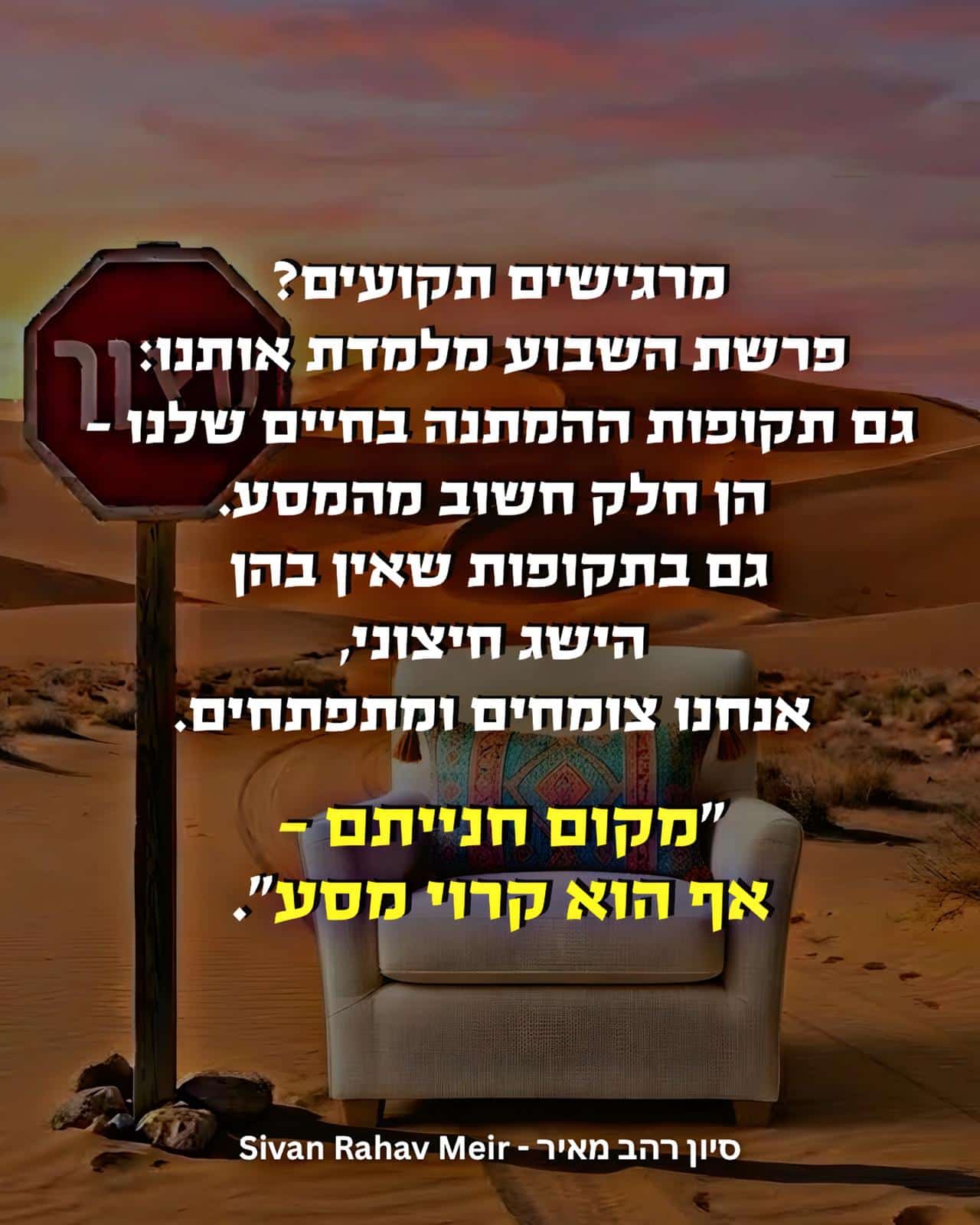
"Often in life everything seems stuck. That's also the case in this week's Torah portion, Vayigash, when it appears that there is no way out. Yaakov our forefather’s sons find themselves trapped by the Egyptian viceroy who stubbornly insists on taking their youngest brother, Binyamin, with him. They don't know that the ruler is actually Yosef, their brother. It's not clear how it's even possible to get out of this.
Often we find ourselves in the midst of difficult and wearisome negotiations. It could be a student or teacher who feels misunderstood, a couple in crisis, parents struggling to communicate with their children. You feel blocked and hit walls, and everything becomes complicated.
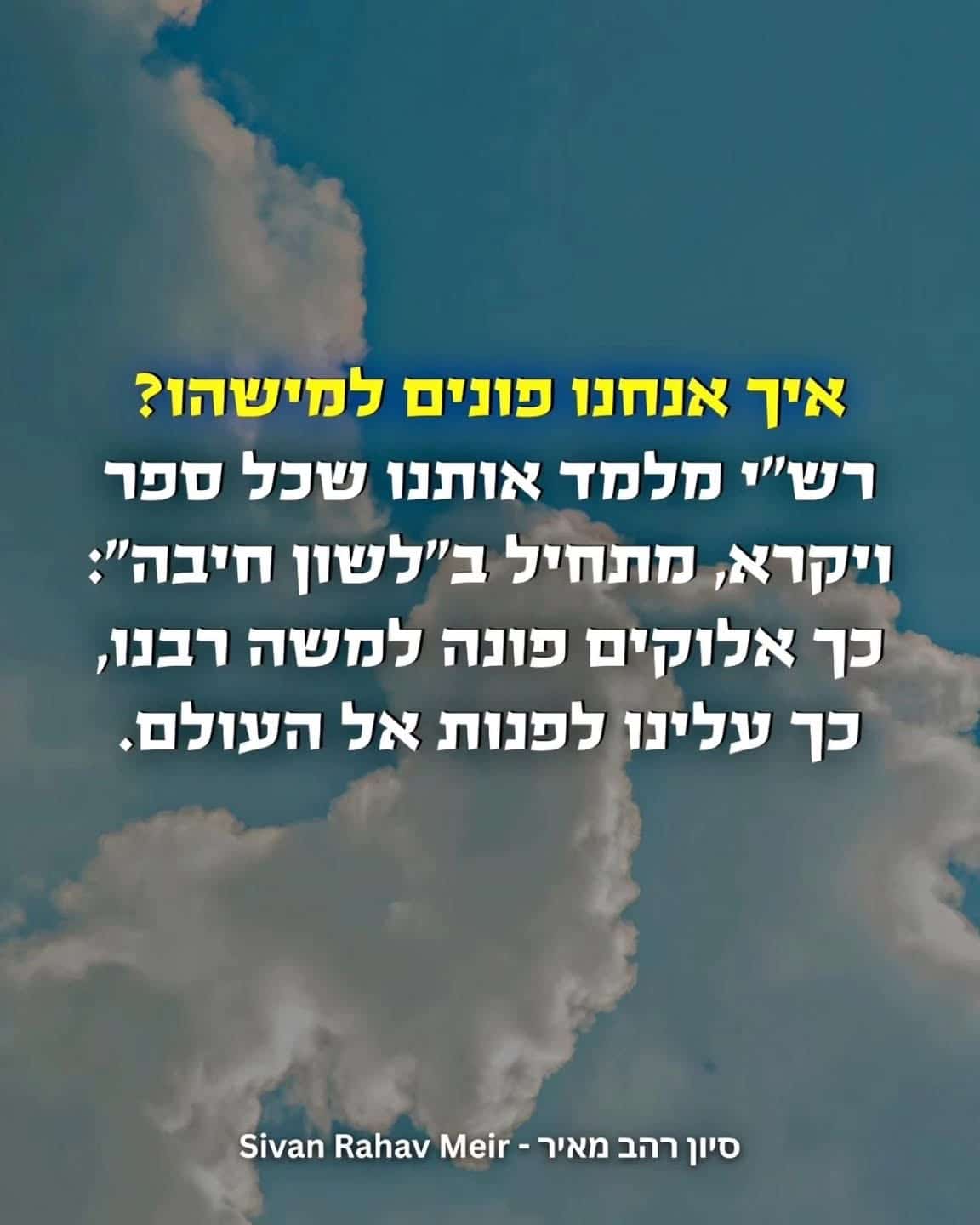
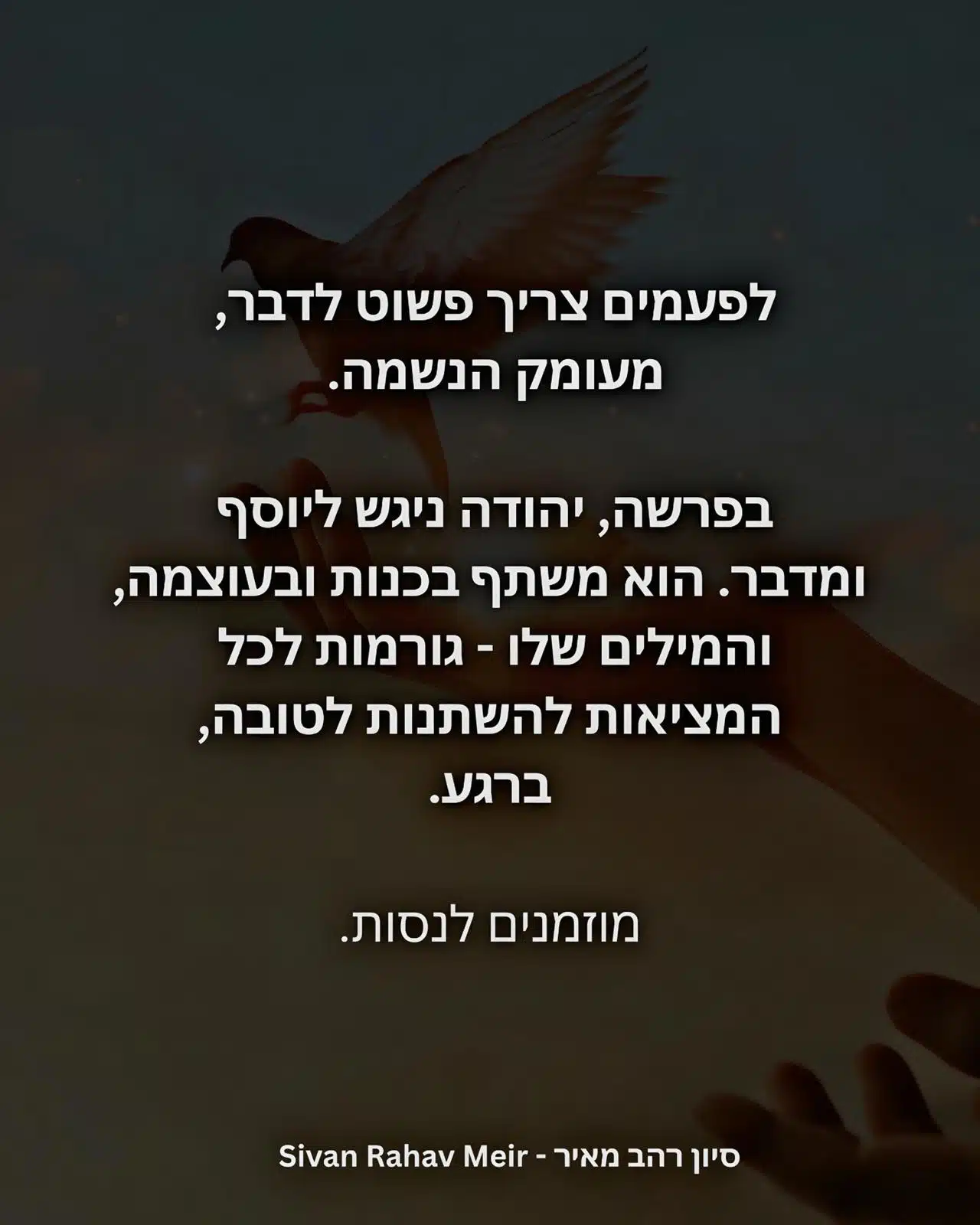
What do you do? When it hurts - you talk. Our Torah portion begins with these words. 'Then Yehuda approached him.' Yehuda simply approaches the Egyptian viceroy and cries out from the depths of his heart. Yehuda tells the whole story, with all its nuances and complexities included. He holds nothing back and speaks with sincerity, shares his feelings and fears, and is not embarrassed to articulate his distress and also to correct and repent for his past actions.
And then the unbelievable happens: Yosef cannot restrain himself any longer and reveals that the intransigent Egyptian viceroy is none other than their long lost brother. The brothers are deeply moved, weep, reunite, and everything turns out for the best. Just two minutes before, Yehuda could not imagine that something like this would ever happen.
When we start to speak truthfully and with full force, to sincerely share our story -- suddenly walls of division and conflict collapse. Try this at home and see for yourself. B’hatzlachah.”