* Translated by Janine Muller Sherr
This Shabbat, throughout the Jewish world, we will begin to read the Book of Shemot. The story at the heart of this book is the Jewish people’s Exodus from Egypt.
Most of us remember the Exodus story from the Passover Seder or even from kindergarten. We are familiar with Pharoah and Moses, the Ten Plagues, and the Splitting of the Sea. But the Book of Shemot is not just the foundational story of the Jewish people — it introduces a revolutionary idea.
Our commentators explain that the Exodus from Egypt is the impetus behind all that takes place in history — the drive toward renewal, the constant battle against evil and subjugation, and the struggle to maintain our faith in God in the face of the forces threatening to lead us astray.
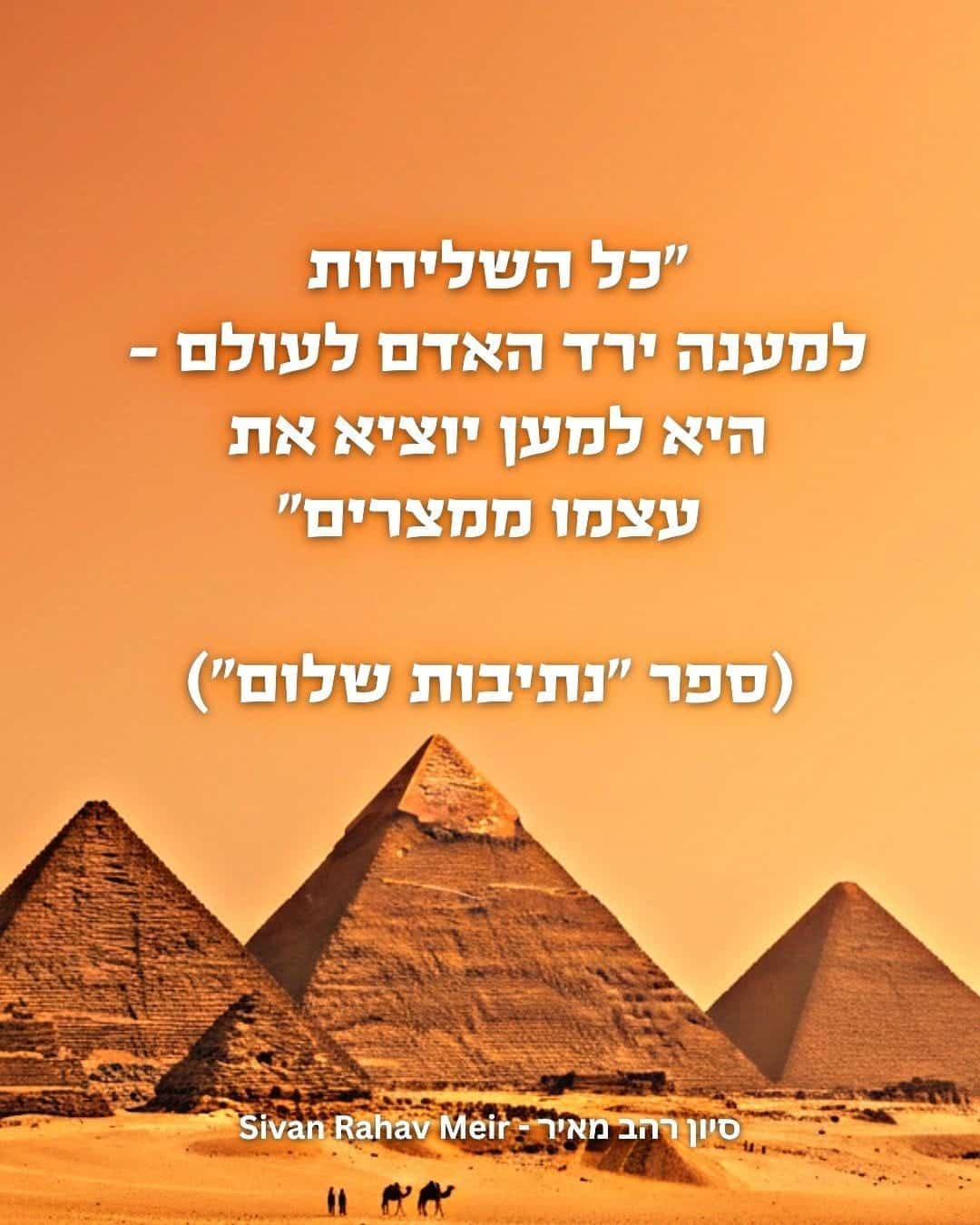
In his book “Netivot Shalom,” Rabbi Shalom Noach Berezovsky (the Slonimer Rebbe) writes: “The entire purpose of a person’s descent into this world is in order to redeem himself from Egypt.”
Every day we must confront our own “Egypt:” This could be a misguided worldview that shapes our way of thinking, a strained relationship, or even a detrimental character trait that we need to overcome.
Each one of us must always be leaving Egypt: discerning those forces that are controlling and “enslaving” us and striving to break free. The Jewish nation must also struggle to free ourselves from foreign influences and become the nation we are meant to be.
Look around and discover small opportunities in your own life to free yourself from “Egypt,” which is the central theme of the Book of Shemot.