* Translated by Janine Muller Sherr
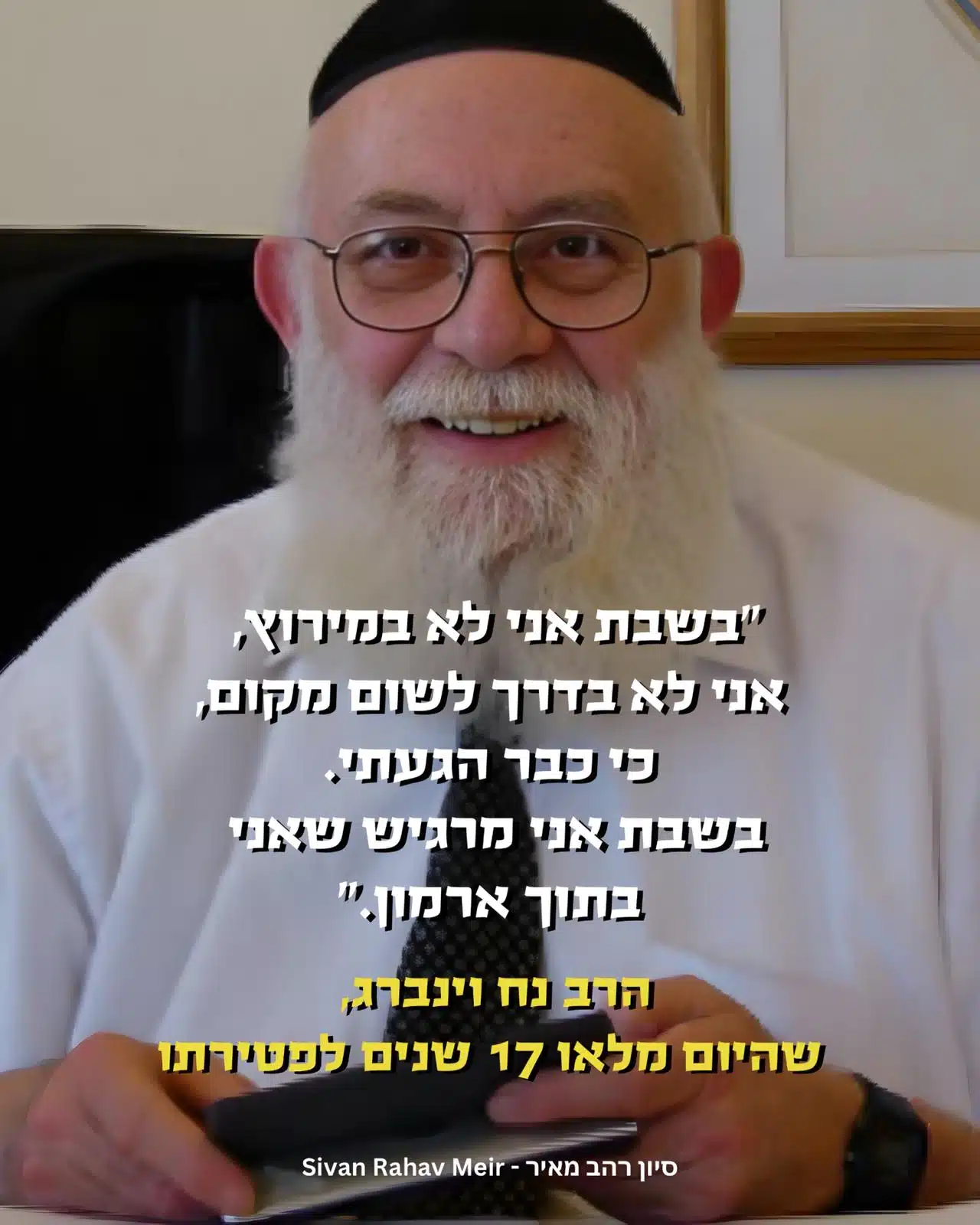
How would you explain the meaning of Shabbat? Seventeen years ago today, Rabbi Noah Weinberg, founder of "Aish HaTorah" passed away.
Here is an excerpt from the talk he would often give to American students to introduce them to Shabbat for the first time:
"We live in a world that gives primacy to action, but Shabbat teaches us to value repose and restraint. Shabbat is the Jewish tool to make sure we don't misunderstand our place in the universe. Refraining from work is the first step toward accomplishing this goal. God gave mankind the power to manipulate and change the world. Because of this, we are easily lulled into thinking that we are in control of the world.
Then comes Shabbat. Once every seven days, we step back from the world and make a statement to ourselves and humanity that we are not in charge of this world. We stop all creative work and acknowledge that it is God's world, not ours. We can manipulate the world, but we don't own it. God gives us clear guidelines for how we may shape the world, but it's not ours to do with as we see fit all the time.
When we refrain from work on Shabbat, we regain clarity and understanding as to Who is the true Creator.
Once we've extracted ourselves from the illusions of our own power and prominence , once we realize we're not God, we free ourselves to reach out and experience the primary goal of Shabbat: getting in touch with God.
On Shabbat, I cease to create, I no longer feel the need to compete with the world around me. Instead of imposing our will upon the world, we are in harmony with it.
I’m no longer on the way to my destination; I’ve already reached the palace. I don’t worry about my work that hasn’t been completed, because Shabbat is the state of completion itself.
The six days of our work week are also blessed since we feel the impact of Shabbat throughout the week. In Judaism, the other days of the week (Sunday, Monday, etc.) don't have special names of their own. Rather, we refer to these weekdays as 'the first day toward Shabbat', 'the second day toward Shabbat',etc. Each day is known only by its relation to Shabbat. In this way, we remind ourselves daily of the centrality of Shabbat.
It is possible to return to our day-to-day lives after the weekend. But we can only return to a better world — after Shabbat".
In memory of Rabbi Weinberg zt”l, and in honor of the upcoming Shabbat.
Shabbat Shalom.